Order the book Thy Kingdom Comes
Thy Kingdom Comes is a history of the Kingdom of God, from Abraham to the first millennium. What did it look like, how did it work from generation to generation? A revealing look at the sophistry and deception of one form of government hated by God and the other instituted by the prophets of God which changed lives, freed nation, brought tyrants down. The Kingdom of God is at hand.
Go to the
Table of Contents
Chapter 9
Temples and Churches
 Part
2 Investing in Diana
Part
2 Investing in Diana
The word ekklesia is not always
translated into “Church”.
One source of confusion is because ekklesia is not a proper
name, but a descriptive noun. Wycliffe calls all ekklesias
“churche”, while, Tyndale always calls them
“congregation”.
Wycliffe took “churche”
from the old English kirke ,which is often attributed to a
pagan temple in earlier times. He always translated ekklesia
“churche”, even in context where the Bible was
speaking of a governmental assembly in Ephesus, not the religious
body of Christ. In 1526, William Tyndale and, in 1535, Myles
Coverdale translated ekklesia as “congregation”.
Tyndale only used the word “church”
in Acts 19:37 in reference to that pagan temple of Diana when he was
translating the word hierosulos [robbers of churches].
For
ye have brought hither these men, which are neither robbers of
churches, nor yet blasphemers of your goddess. Acts 19:37
In Acts, we see ministers of Christ
being accused in Ephesus of being church robbers, guilty of
sacrilege. “Sacrilege”
is from the Latin, sacrilegus,
meaning “one who steals sacred
things”. The word includes legus
,which is the Latin word that deals with “binding
together”, from which we get words like “legal”
and “legislate”.
“Sacred” is
defined as “dedicated to or set apart for the worship…”
And worship
has to do with “allegiance”
and “homage”. Our
understanding of such terms is different than their meaning at the
time the Bible was written.
What was this “church”
that claimed to have been robbed by these “Christians”?
The assembly at Ephesus was fashioned according to the
doctrines of Diana, e.g. Artemus in the Asiatic traditions.
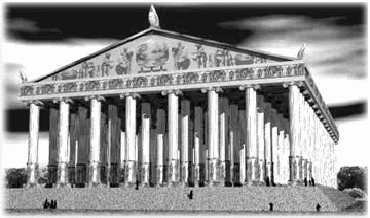
It’s center was a massive temple similar in design to the front
of the US treasury. It
could seat over 24,000 people. Each of its 127 columns had been
contributed by a different king, as it was strategically located on
major trade routes. The most interesting thing was its purpose. It
contained a great vault, which was considered one of the safest
depositories in Asia Minor. This temple actually functioned as a bank
more than a religious institution. The “high priest” was
also a credit officer making loans and collecting interest, managing
valuable property, and in charge of security for those who deposited
valuables in the temple in the course of commerce and trade.
It also provided social insurance
through a system of Qurban or as an underwriter. There were regular
and sizable contributions by members in the hopes of a secure return,
profit, or gain. There was coinage of money and the issuing of
script. It was not only a bank, but a treasury on a national and
international basis. It was not unlike the World Bank or IMF.
This reference to a temple as a bank
is not uncommon. The temples in Egypt acted much like a bank: issuing
script, coining forms of usurious money, making loans, and collecting
interest. These temples of ancient times also acted as investment
houses for mining, trade, and even military ventures. Great returns
could be had with such investments in temples like Janus and Diana.
Governments, like any other business, had a need for banks.
Temples also acted as welfare systems
for the poor in order to gain popularity among the common man. The
contributions guaranteed a social security in case of disability, or
even old age, relieving the family of that responsibility. The
patrons of the temples were the assembly of its members, who would
often meet to decide terms and matters of the business of the temple.
The Temple of Diana could seat over 24,000 investors, or their
representatives, at one time, which included smaller member banks or
kirke.
No one suspected these Christians of
breaking into the vault of Diana’s treasury, but it was clear
that they were considered a threat. This idea becomes less strange to
our thinking when we realize that the tables that Jesus turned
over in the Golden Temple of Herod were also “banks”
and the moneychangers were part of the national bankers' or royal
treasury.
Those ministers did not steal the
money from Diana’s bank vault, but they stole the hearts and
souls of the people in that centralized and usurious pagan system.
This was affecting revenue, which required a steady increase of
investors to thrive.
Judea had also adopted the Roman
system of Qurban, called in the Bible, Corban. This
required funds to be contributed to care for the people. These
funds did not sit idle, but were invested to create a profitable
return. Like any tontine system of entitlements, new funds were
always coming in to pay for any entitlement demands made on the
temple, while invested funds were still at work. Great profits could
be had, vast sums crossed the temple’s tables, administrative
fees were collected. Public buildings, including temples, were built
in other parts of the world with surplus. With guaranteed revenue,
soon borrowing against the future was possible. If investment money
dried up, an economic depression, or even a panic, was likely.
The need for a social systems of
welfare and security have always been a part of society. It is
the left hand of governance. The Levites were vested with this office
and the Porters or Gatekeepers of the Old Testament managed
the funds of that different kind of system. It was not based on
centralized wealth or power, but a network of charity and service.
For centuries, this left hand of
government had been chosen by the people in patterns of tens. Ten
families choose one minister, ten ministers choose one minister, so
on and so forth. Most charity was handled locally. The greatest
servants of servants worked at more national needs, calling for
grander contributions. This network of tens, hundreds, and thousands
were not restricted to centralized temples and mountains for their
daily worship and offerings. They could attend local needs or
national problems quickly and efficiently. Investment was in the
people themselves, which was the treasure of the nation.
Simply by withdrawing support, a
minister could be terminated by his immediate constituency who
maintained that right. There was no top-down authority or entrenched
appointees. There was no going up by steps nor centralization
of any national common purse.
The right hand of government was to
protect all from lawbreakers, both domestic and foreign. In the days
when there was no king in Israel,
every man did according to his own God-given conscience.
Israel was a nation of freemen; God was their king.
Every household was a part of the neighborhood watch, the jural
courts, and the national militia.
Footnotes:
Table of Contents
of the book Thy Kingdom Comes
Peace be to this house,
The Prologue of the book Thy Kingdom Comes
http://www.hisholychurch.org/media/books/TKC/TKCa1-0Prologue.php
1. The Kingdom of God of the book Thy Kingdom Comes
Is Righteousness of the book Thy Kingdom Comes
http://www.hisholychurch.org/media/books/TKC/TKCa1-1IsRighteousness.php
A Man as King of the book Thy Kingdom Comes
http://www.hisholychurch.org/media/books/TKC/TKCa1-2AManasKing.php
2. Abraham Uncivilized of the book Thy Kingdom Comes
The City State of the book Thy Kingdom Comes
http://www.hisholychurch.org/media/books/TKC/TKCb2-1TheCityState.php
Two kingdoms/ The Merchants of Men of the book Thy Kingdom Comes
http://www.hisholychurch.org/media/books/TKC/TKCb2-2MerchantsofMen.php
The Hindu Connection of the book Thy Kingdom Comes
http://www.hisholychurch.org/media/books/TKC/TKCb2-3HinduConnection.php
Abraham and the Legend, The Prodigal Son
Our king and our god? of the book Thy Kingdom Comes
http://www.hisholychurch.org/media/books/TKC/TKCb2-4Legend.php
The Code of Abraham of the book Thy Kingdom Comes
http://www.hisholychurch.org/media/books/TKC/TKCb2-5code.php
Abraham and the Family of the book Thy Kingdom Comes
http://www.hisholychurch.org/media/books/TKC/TKCb2-6Family.php
3. The Altar of Abraham of the book Thy Kingdom Comes
Moses and the Altars of the book Thy Kingdom Comes
http://www.hisholychurch.org/media/books/TKC/TKCc3-1AltarsofClay.php
The Altar of Sin of the book Thy Kingdom Comes
http://www.hisholychurch.org/media/books/TKC/TKCc3-2Sin.php
Sacrifice of the book Thy Kingdom Comes
http://www.hisholychurch.org/media/books/TKC/TKCc3-3Sophistry.php
4. Moses, Moses of the book Thy Kingdom Comes
The Civil State of the book Thy Kingdom Comes
http://www.hisholychurch.org/media/books/TKC/TKCd4-1CivilState.php
Gods Many of the book Thy Kingdom Comes
http://www.hisholychurch.org/media/books/TKC/TKCd4-2godsmany.php
No Kings of the book Thy Kingdom Comes
http://www.hisholychurch.org/media/books/TKC/TKCd4-3NoKings.php
Servant Priests of a Nation of the book Thy Kingdom Comes
http://www.hisholychurch.org/media/books/TKC/TKCd4-4Servants.php
5. Joshua’s Altar of the book Thy Kingdom Comes
White Altars of Joshua
King over us of the book Thy Kingdom Comes
http://www.hisholychurch.org/media/books/TKC/TKCe5-1WhiteAltars.php
Adultery of a Nation of the book Thy Kingdom Comes
http://www.hisholychurch.org/media/books/TKC/TKCe5-2Adultery.php
Fear, Faith and Foolishness of the book Thy Kingdom Comes
http://www.hisholychurch.org/media/books/TKC/TKCe5-3RearFaith.php
6. The World of the book Thy Kingdom Comes
Of Rome and Judea of the book Thy Kingdom Comes
http://www.hisholychurch.org/media/books/TKC/TKCf6-1Rome.php
The Remarkable History of Israel of the book Thy Kingdom Comes
http://www.hisholychurch.org/media/books/TKC/TKCf6-2Israel.php
Rome the Believer of the book Thy Kingdom Comes
The Commander in chiefs
http://www.hisholychurch.org/media/books/TKC/TKCf6-3RomeBeliever.php
A Father’s offer of the book Thy Kingdom Comes
http://www.hisholychurch.org/media/books/TKC/TKCf6-4TheOffer.php
The Hasmonean Appeal of the book Thy Kingdom Comes
Socialization of Rome
http://www.hisholychurch.org/media/books/TKC/TKCf6-5SocialAppeal.php
The Love of kings of the book Thy Kingdom Comes
http://www.hisholychurch.org/media/books/TKC/TKCf6-6LovingKings.php
7. Factions at the Altar of the book Thy Kingdom Comes
The Pharisees and The Sadducees of the book Thy Kingdom Comes
http://www.hisholychurch.org/media/books/TKC/TKCg7-1Factions.php
The Essenes of the book Thy Kingdom Comes
The Healers of a Nation
http://www.hisholychurch.org/media/books/TKC/TKCg7-2Essene.php
8. A King is Born of the book Thy Kingdom Comes
A King is Born of the book Thy Kingdom Comes
http://www.hisholychurch.org/media/books/TKC/TKCh8-1KingBorn.php
What is redemption? of the book Thy Kingdom Comes
http://www.hisholychurch.org/media/books/TKC/TKCh8-2Redemption.php
Kingdom in Turmoil of the book Thy Kingdom Comes
http://www.hisholychurch.org/media/books/TKC/TKCh8-3Turmoil.php
The New Deal of the book Thy Kingdom Comes
http://www.hisholychurch.org/media/books/TKC/TKCh8-4NewDeal.php
9. Temples and Churches of the book Thy Kingdom Comes
The Church
http://www.hisholychurch.org/media/books/TKC/TKCi9-1TemplesandChurches.php
Investing in Diana of the book Thy Kingdom Comes
http://www.hisholychurch.org/media/books/TKC/TKCi9-2InvestinDiana.php
One Father of the book Thy Kingdom Comes
http://www.hisholychurch.org/media/books/TKC/TKCi9-3OurFather.php
Arts of the Temples of the book Thy Kingdom Comes
http://www.hisholychurch.org/media/books/TKC/TKCi9-4TempleArts.php
The Temple of Satan of the book Thy Kingdom Comes
http://www.hisholychurch.org/media/books/TKC/TKCi9-5SatansTemple.php
The Royal Treasury of the book Thy Kingdom Comes
http://www.hisholychurch.org/media/books/TKC/TKCi9-6RoyalTreasury.php
10. Two Paths of the book Thy Kingdom Comes
God’s dominion from the Beginning of the book Thy Kingdom Comes
The revenue of the wicked
http://www.hisholychurch.org/media/books/TKC/TKCj10-1Paths.php
Beams in our eyes of the book Thy Kingdom Comes
Removing the Beam
http://www.hisholychurch.org/media/books/TKC/TKCj10-2Beams.php
These two Kingdoms of the book Thy Kingdom Comes
http://www.hisholychurch.org/media/books/TKC/TKCj10-3TwoKingdoms.php
Faith is actions of the book Thy Kingdom Comes
http://www.hisholychurch.org/media/books/TKC/TKCj10-4Action.php
The kingdom appointed to Liberty of the book Thy Kingdom Comes
http://www.hisholychurch.org/media/books/TKC/TKCj10-5AppointedLiberty.php
11. Where is the kingdom of the book Thy Kingdom Comes
The kingdom comes of the book Thy Kingdom Comes
http://www.hisholychurch.org/media/books/TKC/TKCk11-1Kingdom.php
Eating in the kingdom of the book Thy Kingdom Comes
http://www.hisholychurch.org/media/books/TKC/TKCk11-2Eating.php
Washing in the kingdom of the book Thy Kingdom Comes
http://www.hisholychurch.org/media/books/TKC/TKCk11-3Washing.php
Where is the Church? of the book Thy Kingdom Comes
http://www.hisholychurch.org/media/books/TKC/TKCk11-4Where.php
We are all kings of the book Thy Kingdom Comes
http://www.hisholychurch.org/media/books/TKC/TKCk11-5AllKings.php
12. Apostasy of the book Thy Kingdom Comes
The Ship of State of the book Thy Kingdom Comes
http://www.hisholychurch.org/media/books/TKC/TKCl12-1Ship.php
The Allurement of Wolves of the book Thy Kingdom Comes
http://www.hisholychurch.org/media/books/TKC/TKCl12-2Wolves.php
The Church of the book Thy Kingdom Comes
http://www.hisholychurch.org/media/books/TKC/TKCl12-3Church.php
The Separate Church
http://www.hisholychurch.org/media/books/TKC/TKCl12-4Separate.php
13. The Kingdom of Heaven of the book Thy Kingdom Comes
The State of the Nation of the book Thy Kingdom Comes
http://www.hisholychurch.org/media/books/TKC/TKCm13-1Heaven.php
Seeking the kingdom, The Law of God of the book Thy Kingdom Comes
http://www.hisholychurch.org/media/books/TKC/TKCm13-2SeekLaw.php
What does the Kingdom look like? of the book Thy Kingdom Comes
http://www.hisholychurch.org/media/books/TKC/TKCm13-3looks.php
Assembling a congregation of the book Thy Kingdom Comes
Where to start seeking the kingdom of God
http://www.hisholychurch.org/media/books/TKC/TKCm13-4Start.php
Appendix of the book Thy Kingdom Comes
Appendix 1. Kingdom of Heaven and God of the book Thy Kingdom Comes
http://www.hisholychurch.org/media/books/TKC/TKCn-1Appendix.php
Appendix 2. The things He says of the book Thy Kingdom Comes
http://www.hisholychurch.org/media/books/TKC/TKCn-2AppenSaid.php
Appendix 3. What is Worship? of the book Thy Kingdom Comes
http://www.hisholychurch.org/media/books/TKC/TKCn-3AppenWorship.php
Appendix 4. Who are the Nicolaitans? of the book Thy Kingdom Comes
http://www.hisholychurch.org/media/books/TKC/TKCn-4AppenNicolaitan.php
Appendix 5. Who is a god? of the book Thy Kingdom Comes
http://www.hisholychurch.org/media/books/TKC/TKCn-5Appengods.php
Appendix 6. Oaths and Swearing of the book Thy Kingdom Comes
http://www.hisholychurch.org/media/books/TKC/TKCn-6AppenOaths.php
The Cover of the book, Thy Kingdom Comes
The Elixir of Love.
http://www.hisholychurch.org/media/books/TKC/tkczzwa.php
About the Author of the book Thy Kingdom Comes
http://www.hisholychurch.org/media/books/TKC/tkczzwb.php
Other publications:
The Covenants of the gods
The Free Church Report



 Study Series